
Integração com o Dynamics 365
Capture leads a partir de conversas de chat com IA e sincronize-os diretamente com o Microsoft Dynamics 365. Criado para organizações que priorizam o trabalho em equipe.
O que é a integração do Dynamics 365?
Quando os visitantes interagem com seu chatbot de IA e compartilham informações de contato, esses dados são automaticamente sincronizados com o Microsoft Dynamics 365 como um novo registro de Lead ou Contato.
Isso é especialmente poderoso para organizações que utilizam o Microsoft Teams para chat ao vivo — os leads fluem perfeitamente para o seu Dynamics CRM sem qualquer entrada manual.
Criado para o Microsoft Teams
Equipes + Dinâmica
Os agentes conversam pelo Teams e os leads são sincronizados automaticamente com o Dynamics.
SSO do Azure AD
Autenticação de nível empresarial por meio do Azure Active Directory.
Sincronização do Dataverse
Integração nativa com o Dataverse para uma unificação completa dos dados.
O que é sincronizado
Como funciona
Conecte o Dynamics
A autenticação do Azure AD mantém seus dados seguros.
Configurar mapeamento
Mapeie os dados do chat para campos padrão e personalizados do Dynamics.
Sincronização automática de leads
Contatos e leads criados em tempo real.
How It Works: Power Automate Integration
The Dynamics 365 integration uses a Custom API Action in Social Intents that POSTs lead data to a Power Automate HTTP trigger. Power Automate then creates the Lead in Dataverse.
Integration Flow:
Pré-requisitos
- Microsoft Dynamics 365 environment with Dataverse
- Power Automate license (included with most Dynamics 365 plans)
- Permission to create Power Automate flows and Dataverse records
- Social Intents Business plan or higher (AI Actions required)
Step 1: Create the Custom API Action
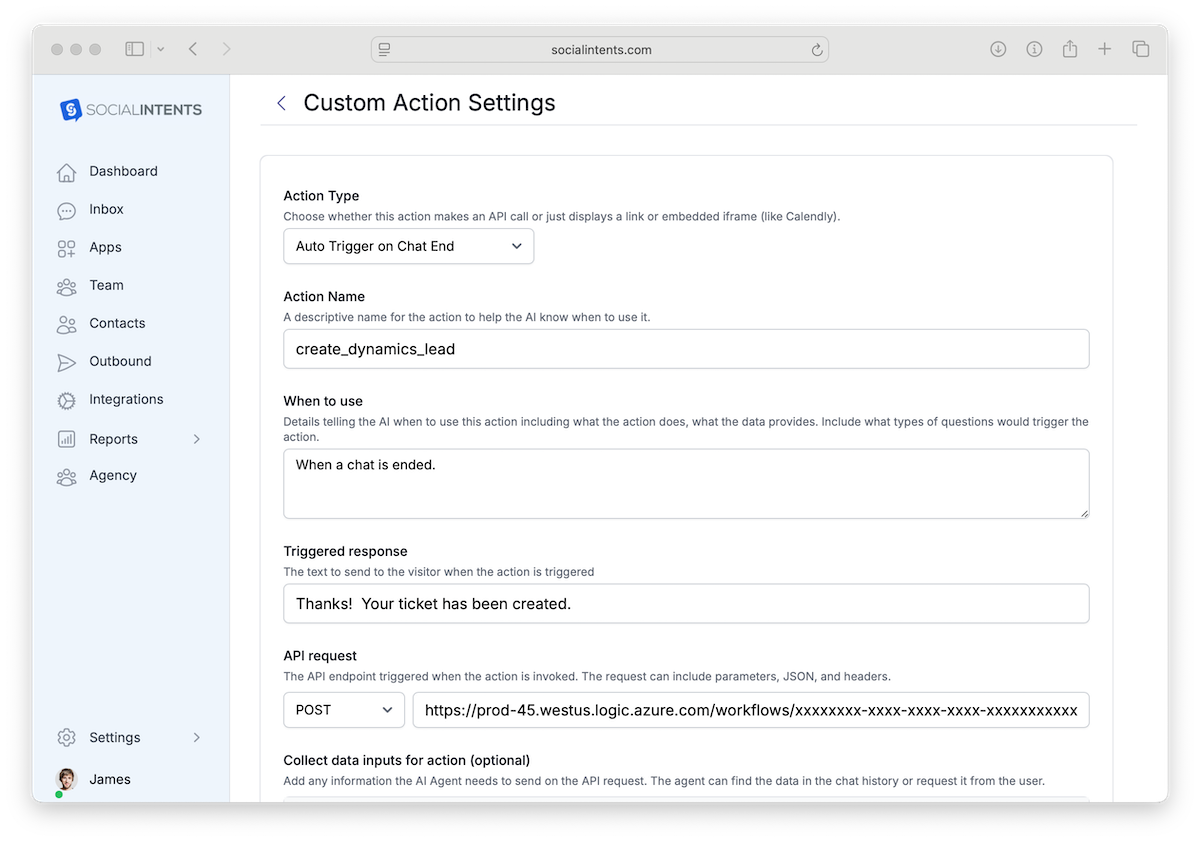
In Social Intents, go to AI Chatbot Settings → AI Actions, click Add Action, and configure:
| Campo | Valor |
|---|---|
| Tipo de ação | Auto Trigger on Chat End |
| Nome da ação | create_dynamics_lead |
| Collect data inputs | subject, firstname, lastname, company, email, phone, website, transcript, sessionId |
| HTTP Method | POSTAR |
| API URL | https://prod-XX.westus.logic.azure.com:443/workflows/YOUR_FLOW_ID/triggers/manual/paths/invoke?api-version=2016-06-01&sp=%2Ftriggers%2Fmanual%2Frun&sv=1.0&sig=YOUR_SIG |
| Headers | Content-Type: application/json |
JSON Request Body
{
  "subject": "{{subject}}",
  "firstname": "{{firstname}}",
  "lastname": "{{lastname}}",
  "company": "{{company}}",
  "email": "{{email}}",
  "phone": "{{phone}}",
  "website": "{{website}}",
  "transcript": "{{transcript}}",
  "sessionId": "{{sessionId}}"
}
Step 2: Create the Power Automate Flow
In Power Automate, create a new Instant cloud flow with an HTTP request trigger.
A) HTTP Request Trigger
Use “When an HTTP request is received” as the trigger. Paste this JSON schema so Power Automate knows the incoming data shape:
{
  "type": "object",
  "properties": {
    "subject":    { "type": "string" },
    "firstname":  { "type": "string" },
    "lastname":   { "type": "string" },
    "company":    { "type": "string" },
    "email":      { "type": "string" },
    "phone":      { "type": "string" },
    "website":    { "type": "string" },
    "transcript": { "type": "string" },
    "sessionId":  { "type": "string" }
  }
}
B) Add a New Row in Dataverse — Leads Table
Add a Dataverse → Add a new row action. Select the Leads table and map the fields:
| Dynamics 365 Field | Power Automate Dynamic Content |
|---|---|
| Topic (Subject) | triggerBody()?['subject'] |
| First Name | triggerBody()?['firstname'] |
| Last Name | triggerBody()?['lastname'] |
| Nome da empresa | triggerBody()?['company'] |
triggerBody()?['email'] | |
| Business Phone | triggerBody()?['phone'] |
| Website | triggerBody()?['website'] |
| Description | concat('Chat Transcript (Session: ', triggerBody()?['sessionId'], '):\n', triggerBody()?['transcript']) |
C) Optional: Attach Transcript as a Note
Add a second Dataverse step — Add a new row in the Notes table — to attach the full transcript as a Note on the Lead:
| Campo | Valor |
|---|---|
| Subject | Transcrição do chat |
| Note Text | triggerBody()?['transcript'] |
| Regarding (Lead) | outputs('Add_a_new_row')?['body/leadid'] |
D) Response Action
Add a Response action to return a success status:
Status Code: 200
Body:
{
  "status": "success",
  "leadId": "@{outputs('Add_a_new_row')?['body/leadid']}"
}
Solução de problemas
Flow never triggers
Ensure the Power Automate HTTP POST URL is copied correctly, including the sig query parameter. Test by sending a manual POST from Postman or curl.
Lead created but fields are empty
Check that the JSON schema in your HTTP trigger matches the body your action sends. Mismatched property names will result in null values.
403 Forbidden error
The Power Automate flow URL may have expired. Re-save the flow to generate a new URL and update the API URL in Social Intents.
Mais ações de CRM
Unifique o Teams Chat e o Dynamics 365
Conecte sua pilha da Microsoft e capture todos os leads automaticamente.
14 dias de avaliação gratuita. Não é necessário cartão de crédito.